
Al Marmoom Desert Conservation Reserve: Complete Guide
Al Marmoom is Dubai’s largest desert reserve, covering roughly 10% of the emirate. See its history, Al Qudra Lakes, wildlife, and how it differs from the DDCR.
Planning a Dubai Desert Safari starts with choosing the right outfit. Roar Adventure Tourism LLC, operating at the Lahbab Red Dunes via Dadabhai Camp, recommends loose-fitting cotton or linen clothing in light colors like beige, white, and khaki fabrics that combat the Arabian Desert’s extreme temperature swings, from 48°C summer afternoons to 12°C winter nights. Women should opt for long-sleeved tunics with wide-leg trousers; men should choose breathable polos with cargo pants. Closed-toe sneakers are essential for dune bashing, sandboarding, camel riding, and quad biking. Accessories like UV400 sunglasses, SPF 50+ sunscreen, and a traditional shemagh (keffiyeh) protect against the UAE desert sun’s UV Index 11+. Whether booking an evening desert safari, morning safari, or overnight safari, dressing appropriately ensures comfort, cultural respect per Dubai Tourism guidelines, and a safe, memorable desert experience.
What you wear on a Dubai desert safari decides how comfortable your entire trip will be. The Arabian desert at Lahbab where Roar Adventure Tourism runs its Dadabhai Camp on the red dunes reaches 48°C during summer afternoons and drops to 12°C on winter nights. That 36-degree swing in a single day means your clothing choices directly affect your safety, comfort, and enjoyment.
Sand at Lahbab reaches a surface temperature of 70°C in peak summer hot enough to burn exposed skin in seconds. The desert also has a UV index of 11 or above from March through October, which causes sunburn in under 15 minutes on unprotected skin.
This guide covers every clothing decision you need to make before you arrive from fabrics and footwear to seasonal layers, activity-specific outfits, and what to leave at your hotel.
Cotton and linen are the best fabrics for a Dubai desert safari. Both fabrics allow air to pass through them, which keeps your skin dry. Synthetic fabrics like polyester trap heat against your body, which causes you to sweat more and feel significantly hotter.
Moisture-wicking performance fabrics the kind used in sportswear work well for active portions like dune bashing and quad biking. They pull sweat away from your skin and dry fast. Use them for the activity portion, then change into linen or cotton for the camp evening.
Example: A loose cotton t-shirt paired with linen trousers keeps you 5–8°C cooler than a polyester outfit in the same desert sun, based on fabric thermal resistance data.
| Fabric | Breathability | Best Used For | Avoid When |
| Cotton | High | All-day safaris, camp activities | Heavy rain (rare in UAE) |
| Linen | Very High | Summer safaris, daytime heat | Sandboarding (wrinkles and shifts) |
| Moisture-wicking | High | Dune bashing, quad biking, sandboarding | Evening camp fabric looks too athletic |
| Merino wool (light) | Medium | Winter overnight safaris only | Any summer activity |
| Polyester | Low | — | All desert conditions |
| Thick denim | Very Low | — | Any desert safari, any season |
| Wool (heavy) | Very Low | — | Any daytime safari |
One thing no competitor covers: the 4×4 Land Cruiser is fully air-conditioned during the drive to and from Lahbab. You spend up to 90 minutes in cold air conditioning each way. A thin top layer you can throw on inside the vehicle prevents you from getting cold during transit, then you remove it once you step into the desert.
Loose-fitting clothes are always the right choice for a Dubai desert safari. Loose clothing allows air to move around your body. Tight clothing blocks airflow and causes chafing when fine red sand from the Lahbab dunes works its way inside fabric during dune bashing.
Long loose pants protect your legs from two specific hazards: UV rays and hot sand splash. When a 4×4 crests a dune, sand flies sideways at speed and contacts exposed legs directly. This does not cause injury, but fine red sand on bare skin throughout a 6-hour safari causes irritation and chafing that builds progressively.
Long sleeves are more useful than short sleeves even in heat. A light long-sleeved cotton top blocks more UV than SPF 30 sunscreen while also providing a physical barrier against sand particles. You can push sleeves up when seated at camp and pull them down during dune activities.
Wear light colors white, beige, khaki, sand, and light grey. Light colors reflect sunlight instead of absorbing it, which keeps your body temperature lower.
Dark colors like black, navy, and dark brown absorb heat. In 40°C+ desert conditions, dark clothing raises your skin surface temperature measurably within minutes of sun exposure.
One detail competitors miss: the Lahbab red dunes leave a fine rust-red dust on everything. Pure white clothing picks up this staining visibly. If you are wearing white for photography, accept the red dust as part of the experience it washes out or bring a change of top for the camp portion of your safari.
Earth tones beige, terracotta, camel, pale olive look exceptional in desert photographs. They do not compete with the landscape and give photos a natural, editorial feel. For a pop of contrast, bring one high-colour item (deep red, cobalt blue, emerald green) specifically for sunset shots at the top of the dunes.

Women visiting the Dubai desert safari should wear loose long-sleeved tops or tunics paired with wide-leg trousers, linen pants, or a maxi skirt. These choices offer sun protection, allow free movement, and respect the UAE’s cultural norms.
Recommended outfit for women:
Women with long hair should tie it back before dune bashing. Fine Lahbab sand penetrates hair at speed and takes significant effort to wash out. A scrunchie or hair tie on your wrist before the 4×4 starts moving saves you 30 minutes of shower time later.
Women do not need to wear an abaya (the full-length black cloak worn by Emirati women). However, many guests at Roar Adventure Tourism’s Dadabhai Camp try one on for photographs it is a popular experience included with safari packages.
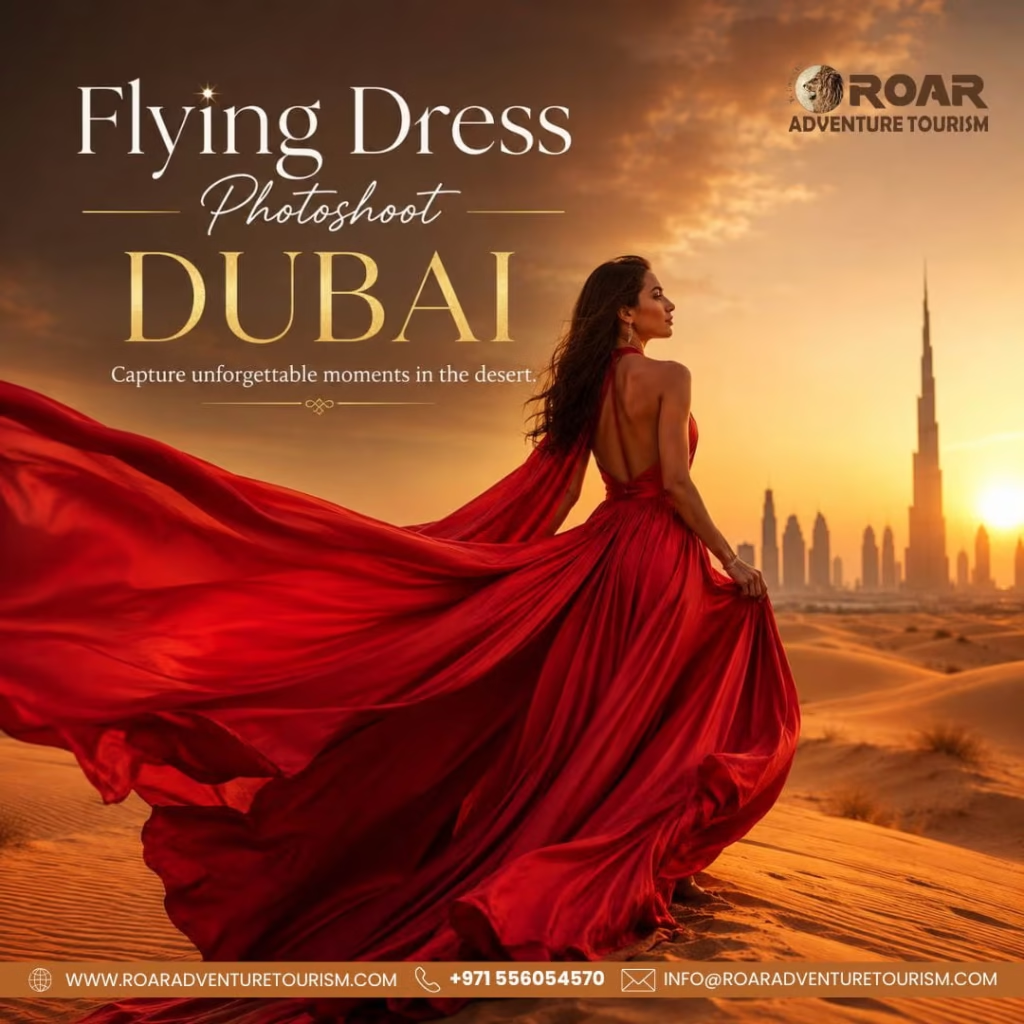
For women who plan a flying dress photoshoot at the desert, pack a separate photoshoot outfit in your bag and change after the activity portion ends. Never attempt a flowing dress during dune bashing it creates a sail effect in the moving vehicle and can cause the fabric to catch.
Men should wear a loose cotton or linen shirt with lightweight trousers or knee-length shorts. Long pants outperform shorts in the desert because they protect your legs from sand abrasion, camel saddle friction, and direct UV exposure.
Recommended outfit for men:
Men with long hair or beards should consider a bandana or shemagh wrap during dune bashing. Sand builds up in facial hair fast and becomes uncomfortable at camp.
Men can try a kandura the long white ankle-length Emirati robe for photographs at Dadabhai Camp. It is paired traditionally with the ghutra (white headdress) and agal (black cord). Roar Adventure Tourism’s guides are happy to show you how to wear both properly, and the kandura genuinely works as desert clothing its loose ankle-length design keeps the body cool and sand-free.
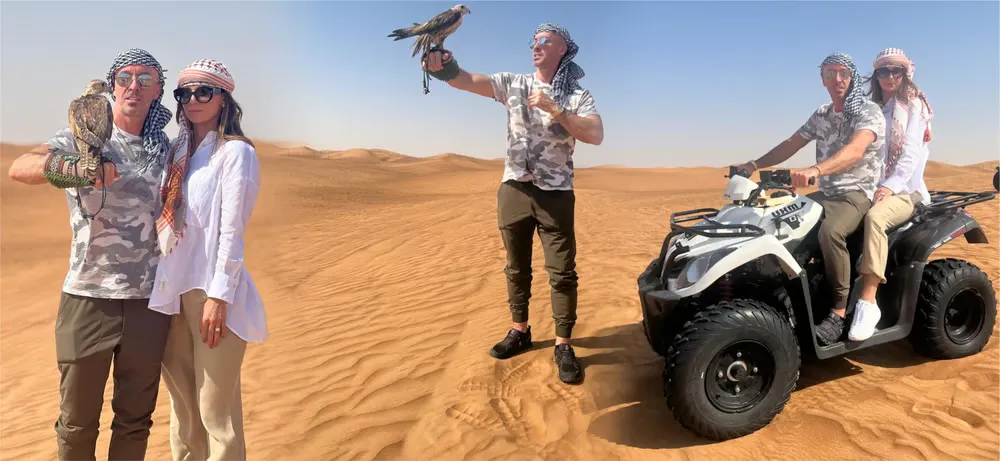
Closed-toe sneakers or light trail shoes are the best footwear for a Dubai desert safari. They protect your feet from hot sand which reaches over 70°C surface temperature in summer and provide grip on uneven dune terrain.
Closed shoes are mandatory for dune bashing, quad biking, and sandboarding. Roar Adventure Tourism’s quad biking packages do not permit riders in open-toe footwear. This is a safety rule, not a style preference.
At the Bedouin camp, once all activities are complete, flat sandals with a back strap are perfectly fine. The ground at Dadabhai Camp is compacted and level. This is also the only time flip flops are acceptable only inside the camp seating area, not on the dunes.
Flat-soled sneakers without chunky heels. During a camel ride, your feet hang from the saddle. Shoes with thick soles sit awkwardly and put pressure on your ankles. Women should avoid wedges and platform shoes entirely.
| Activity | Best Footwear | Avoid |
| Dune bashing | Closed-toe sneakers, trail shoes | Sandals, flip flops, bare feet |
| Sandboarding | Athletic shoes with rubber sole | Open-toe, slip-ons |
| Camel riding | Flat closed sneakers | Heeled shoes, chunky boots |
| Quad biking | Closed-toe shoes with ankle support | Any open footwear (not permitted) |
| Dune buggy | Closed-toe athletic shoes | Open-toe (not permitted) |
| Camp dinner and shows | Flat sandals (back strap), sneakers | High heels |
| Dune walking / photography | Light sneakers or trail sandals | Bare feet (hot sand), flip flops |
| Overnight sleeping | Socks (desert sand is cold at night) | Bare feet |
The right accessories protect you from three desert hazards: UV radiation, wind-blown sand, and dehydration.
Essential accessories:
A shemagh (also called keffiyeh or ghutra) is a traditional Arab cotton headscarf used across the UAE and Arabian Peninsula. It has a practical function: covering the face and neck during sandstorms and wind. Tourists wear them too it is both culturally respectful and genuinely useful on the dunes.
One accessory gap competitors miss: bring deodorant or antiperspirant wipes. Six hours of desert activity produces significant sweat. The evening camp at Dadabhai Camp includes a multi-course BBQ dinner and live entertainment Roar’s exclusive Sufi Dance Show on VIP and Private packages. Freshening up before dinner makes the evening more enjoyable.
Optional but useful:
What NOT to bring in your bag or wear:
Different safari types at Roar Adventure Tourism have different clothing needs based on timing, activities, and duration.
The evening desert safari starts at approximately 3:00 PM and ends around 9:30 PM. You transition from hot afternoon heat into cool desert night within the same outing.
Outfit strategy: Start in light, breathable daytime clothes and add a warm layer after sunset. In October–March, desert temperatures drop to 12–15°C after dark. In April–September, evenings stay warm a light shawl is enough.
Checklist:
The morning desert safari starts before sunrise and ends by mid-morning. This is the most active safari dune bashing and sandboarding happen during the coolest part of the day.
In winter, sunrise temperatures sit at 15–18°C. Bring a light layer for pickup that you can remove once the sun rises. In summer, even dawn starts at 28°C light athletic clothing from the start.
Pickup timing note: morning safari pickup typically happens at 8:15–8:45 AM. The air conditioning in the 4×4 can feel cold if you are dressed only in thin summer clothes. A light zip-up jacket for the drive becomes unnecessary by the time you reach the dunes.
The overnight safari requires the most clothing planning. You need clothes for hot afternoon activities, a fresh change for the evening camp dinner, and warm layers for sleeping.
Packing list for overnight:
Desert overnight temperature in January drops to 7°C between 2–5 AM the coldest window of the night. Most operators provide blankets, but having your own fleece layer is the safest approach.
The VIP desert safari includes Roar’s exclusive Sufi Dance Show, a private seating area, and a more elevated camp experience. Smart casual clothing fits the setting better than purely athletic wear.
Suggested VIP outfit (women): A flowy wide-leg linen trouser with a fitted long-sleeve top or elegant tunic, flat closed sandals, and a light wrap for the evening.
Suggested VIP outfit (men): Linen shirt (button-down or mandarin collar) with lightweight chino trousers, clean sneakers or loafers, and a light jacket.
For the private vehicle option at AED 999, you have the desert entirely to yourself which means more flexibility for photoshoots and outfit changes between the activity and the camp.
| Month | Daytime Temp (°C) | Night Temp (°C) | UV Index | Clothing Strategy |
| January | 22–24 | 12–15 | 4–5 (Moderate) | Light layers + warm jacket for night |
| February | 23–26 | 13–16 | 5–6 (Moderate) | Light layers + hoodie for evening |
| March | 26–32 | 17–20 | 7–8 (High) | Breathable cotton + SPF 50 + light evening layer |
| April | 32–38 | 22–25 | 9–10 (Very High) | Full sun protection + light cotton + hat mandatory |
| May | 38–42 | 27–30 | 10–11 (Very High) | Minimal light cotton only + avoid afternoon |
| June | 42–45 | 30–33 | 11 (Extreme) | Ultra-light cotton + evening safari only |
| July | 44–48 | 32–35 | 11 (Extreme) | Ultra-light cotton + evening safari only |
| August | 44–48 | 31–34 | 11 (Extreme) | Ultra-light cotton + evening safari only |
| September | 40–44 | 28–31 | 10–11 (Very High) | Light cotton + SPF 50 mandatory |
| October | 34–39 | 23–26 | 8–9 (High) | Light breathable + optional evening layer |
| November | 27–33 | 18–21 | 6–7 (High) | Light cotton + jacket for evening |
| December | 22–26 | 13–16 | 4–5 (Moderate) | Layered outfit + jacket + warm wrap for night |
Recommended Video: Search YouTube for “what to wear on a Dubai desert safari” to watch a practical visual packing guide from travellers who have experienced the Lahbab red dunes.
Wear clothes you do not mind getting dusty. Loose trousers and a cotton long-sleeve shirt are ideal. One thing no competitor mentions: bring a hair tie and wrap long hair before the 4×4 starts moving. At 60 km/h over dunes with windows open, fine Lahbab sand saturates loose hair completely.
Motion sickness note: If you are prone to motion sickness, wear loose clothing with no waistband pressure. Tight jeans or belts with hard buckles press into your abdomen during the vehicle’s steep dune climbs and drops, making nausea significantly worse.
Loose trousers not shorts or skirts. During a camel ride, your inner thighs and knees press directly against the saddle and the camel’s body. Loose cotton prevents skin contact and chafing. Women should avoid flowing skirts they shift upward when mounting the camel.
Closed-toe shoes with ankle support are mandatory. Long trousers protect against sand and small stones that kick up at speed. Roar Adventure Tourism’s quad biking packages require closed shoes riders in open footwear cannot participate.
Athletic shoes with rubber soles give the best grip. Avoid wide-leg linen during sandboarding loose fabric flaps and catches wind during the descent, which disrupts balance. Fitted athletic trousers or regular slim-fit cotton pants work better here.
The evening entertainment at Dadabhai Camp involves sitting on floor cushions and rugs. Women should avoid very short skirts or wide loose skirts that spread unpredictably when sitting cross-legged. Loose wide trousers and maxi skirts sit comfortably on floor cushions. Roar’s exclusive Sufi Dance Show available on VIP and Private packages is performed in a private setting with a more relaxed, immersive atmosphere than a standard group camp.
No specific clothing rules, but avoid wearing light colours near the falconry demonstration area. Falcons respond to movement and contrast. A neutral outfit is less likely to distract the bird. Keep scarves and loose fabric tucked in when the falcon is on your glove for a photograph.
Earth tones (beige, terracotta, camel, pale gold) photograph beautifully against the red Lahbab dunes. For dramatic contrast shots, cobalt blue, emerald green, and deep burgundy work exceptionally well. The best time for desert photos is 30 minutes before sunset the golden light on the red sand makes any neutral outfit look editorial.
For a flying dress photoshoot, pack the dress separately and change after all activity portions end. The dress performs best in the calm air of early evening, not during dune bashing.
Summer in Dubai (June to September) means temperatures reaching 45–48°C during the day. Roar Adventure Tourism strongly recommends the evening desert safari during summer the air temperature drops from around 42°C at 4 PM to 33°C by 8 PM, making the camp portion genuinely comfortable.
Summer clothing rules:
In summer, even at 6 PM you will sweat during the dune bashing session. Breathable performance fabric for the active portion, then change into a clean linen top for the camp dinner and entertainment.
Winter (November to February) brings warm days of 22–28°C and cold desert nights of 12–15°C. Layering is the core strategy.
Winter desert safari clothing:
January is the coldest month. Temperatures at the Lahbab desert during a VIP desert safari dinner in January can drop to 12°C, with wind chill making it feel cooler. A fleece or down-light jacket is not excessive in this month it is the right choice.
Certain clothing creates real problems not just discomfort.
Do not wear:
Yes. Roar Adventure Tourism’s Dadabhai Camp offers opportunities to try traditional Emirati dress for photographs a popular experience with guests from all over the world.
The kandura (also called dishdasha or thobe) is a long white ankle-length robe with full sleeves. It is not a costume it is the standard daily clothing of Emirati men. Its loose ankle-length design keeps the entire body shaded and cool, which is why it outperforms most tourist clothing in the desert. Paired with the ghutra (white square headdress) and the agal (black double-cord that holds the ghutra in place), it is the complete traditional Emirati look.
A variation is the shemagh a red-and-white checkered version of the ghutra, worn without the agal in a style called Hamdaniyya. Younger Emirati men wear this style more commonly. It provides identical sun and wind protection.
The bisht is a black or beige ceremonial cloak with gold or silver embroidery, worn over the kandura at formal events, weddings, and Eid. You will not wear one on a safari, but you may see camp hosts wearing it during special occasions.
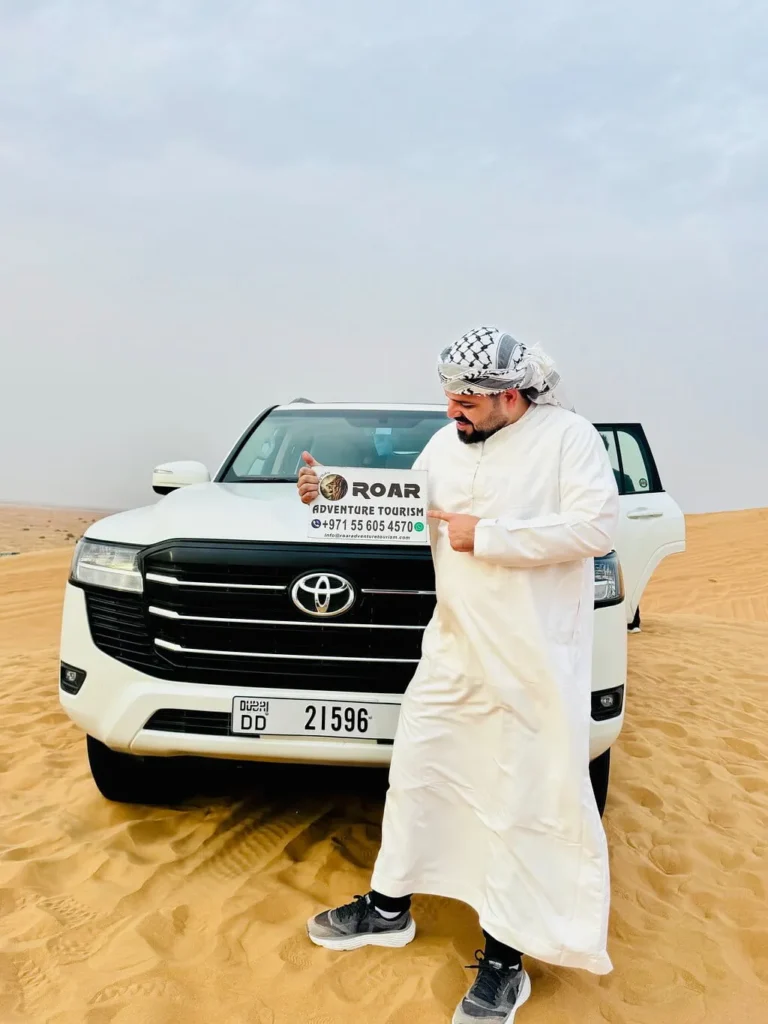
The abaya is a loose full-length cloak, traditionally black, worn over regular clothes. Modern abayas come in navy, grey, and deep brown. It is paired with the sheila (black headscarf). Under the abaya, Emirati women wear the jalaabiya a colourful gown-like dress with embroidery, essentially the female version of the kandura. The Emirati burqa (distinct from South Asian versions) is a face mask of lightweight fabric with a wooden nose-bridge found in golden yellow, red, and green. It is a traditional face covering, not a religious requirement.
Children need the same clothing principles as adults, with extra attention to sun protection. Children’s skin burns faster than adult skin at the same UV index. The Dubai desert safari for kids at Roar Adventure Tourism includes age-appropriate activities see the desert safari age limits page for activity-specific eligibility.
Kids’ safari clothing checklist:
Avoid sandals and flip flops for children during the active portions. Kids run and fall on uneven terrain. Open footwear on hot Lahbab sand causes immediate foot burns.
Pregnant women should wear loose breathable clothing, flat closed shoes, and a light jacket for the evening. The desert safari for pregnant ladies at Roar Adventure Tourism is adapted dune bashing is skipped so the clothing does not need to accommodate high-impact activity.
Clothing guidance for expectant mothers:
Roar Adventure Tourism has a dedicated pregnancy-safe safari guide with full safety information. Always consult your doctor before booking any desert tour during pregnancy.

No competitor covers this. It is worth knowing before you go.
After your safari:
| Situation | What to Wear | What to Avoid |
| Standard evening safari | Loose cotton/linen + closed shoes + jacket | Tight jeans, synthetics, dark colours |
| VIP / Private safari | Smart casual: linen trousers + button-down or elegant tunic | Sports kit only, sandals |
| Summer (June–Sept) | Ultra-light cotton, long sleeves, light colours, SPF 50 mandatory | Dark fabric, synthetics, sleeveless tops |
| Winter (Nov–Feb) | Light daytime layers + fleece/hoodie + socks for night | Shorts only, no warm layer |
| Morning safari | Lightest outfit + jacket for 4×4 AC + sun protection from dawn | Heavy fabrics, dark colours |
| Overnight safari | Daytime outfit + fleece + warm sweatpants + socks for sleeping | Light evening-only outfit with no warm layer |
| Dune bashing | Loose cotton, closed-toe shoes, hair tied | Sandals, tight clothing, loose hair |
| Camel riding | Loose long trousers, flat closed shoes | Shorts, flowing skirts, flip flops |
| Quad biking | Long trousers, closed shoes with ankle support (mandatory) | Open footwear (not permitted) |
| Sandboarding | Athletic trousers, rubber-sole shoes | Loose flowing skirts, wide-leg linen |
| Tanoura/Sufi show seating | Wide trousers or maxi skirt comfortable for floor seating | Short skirts, stiff denim |
| Kids | UPF cotton long sleeves, trousers, hat with strap, sneakers | Flip flops, sleeveless tops, shorts |
| Pregnant women | Loose maternity clothing, flat shoes, elasticated waist | Heels, tight waistbands, open shoes |
| Desert photoshoot | Earth tones or high-contrast colours | Colours that match the sand |
| Flying dress photoshoot | Photoshoot dress packed separately; worn after activities | During dune bashing or any vehicle activity |
Shorts are allowed but not recommended. They leave your legs exposed to sun, sand abrasion during dune bashing, and camel saddle friction. Lightweight long trousers protect your legs and keep you cooler by blocking direct UV rays which feels counterintuitive but is scientifically accurate. If you wear shorts, apply SPF 50+ to all exposed leg skin and accept the sand chafing risk.
Yes, modest dress is expected and practical. Dubai is a UAE city with Emirati cultural norms that apply even in tourist settings. Covering shoulders and knees shows cultural respect. It also protects you better from the desert sun. This is not a strict enforcement rule no one will turn you away but it reflects basic cultural consideration for the Emirati staff and local guests who share the camp.
Not during activities. Sand surface temperature at Lahbab exceeds 70°C in summer. Flip flops fill with sand within seconds on the dunes and provide no ankle support on uneven terrain. Closed-toe sneakers are the minimum for any active portion. Flat sandals with a back strap are fine once you are seated at the Bedouin camp for dinner.
Cotton and linen. Both allow airflow and absorb moisture. Moisture-wicking sports fabrics work well for the active dune bashing and quad biking portion. Avoid polyester, nylon, and thick cotton blends all trap heat and create a humid layer against the skin.
In October through March, yes. Desert temperatures drop to 12–15°C after sunset in winter. In December and January, a proper light jacket is needed a thin shawl is not enough. In summer (June to September), evenings stay above 30°C and a light shawl is sufficient.
Earth tones and high-contrast colours photograph best against the red Lahbab dunes. Beige, camel, terracotta, and sand give an editorial natural look. Deep red, cobalt blue, and emerald green pop dramatically against the golden-red sand. Avoid colours that match the dunes you will disappear into the background.
Yes. Roar Adventure Tourism’s Dadabhai Camp provides traditional clothing for photo opportunities. The kandura (men) and abaya (women) are practical garments too their full-length loose design is genuinely cooler and better sand-protected than most tourist clothing. Guides at camp are happy to show you how to wear them correctly.
Smart casual with practical desert elements. The VIP desert safari includes a private seating area, falconry, and Roar’s exclusive Sufi Dance Show. Linen trousers with a light button-down shirt (men) or a flowy wide-leg trouser with an elegant tunic (women) fits the setting. Add closed shoes for the activity portion and a jacket or wrap for after sunset.
No enforced dress code, but cultural guidelines apply. Roar Adventure Tourism does not turn guests away for their clothing. The guidelines in this page are practical they protect you from heat, UV exposure, and sand and culturally considerate toward the UAE context. Guests who follow these guidelines consistently report a more comfortable and enjoyable experience.
Choosing the right Dubai desert safari clothing takes five minutes of planning and makes the entire experience significantly better. Wear loose, light, breathable fabrics. Protect your skin with sun-blocking layers, a hat, and SPF 50+. Add a warm layer for evenings between October and March. Wear closed-toe shoes for every activity. Pack deodorant wipes for the camp dinner. Those five decisions cover 95% of clothing-related comfort on a Dubai desert safari.
Ready to book? Roar Adventure Tourism operates from Dadabhai Camp at the Lahbab red dunes and offers Evening Desert Safari from AED 99, Morning Desert Safari from AED 149, VIP Desert Safari from AED 149, Private Desert Safari from AED 999 per vehicle, and Overnight Desert Safari from AED 349 per person. WhatsApp us at +971 55 605 4570 or visit roaradventuretourism.com to book.
A curated list of the most popular travel packages based on different destinations.
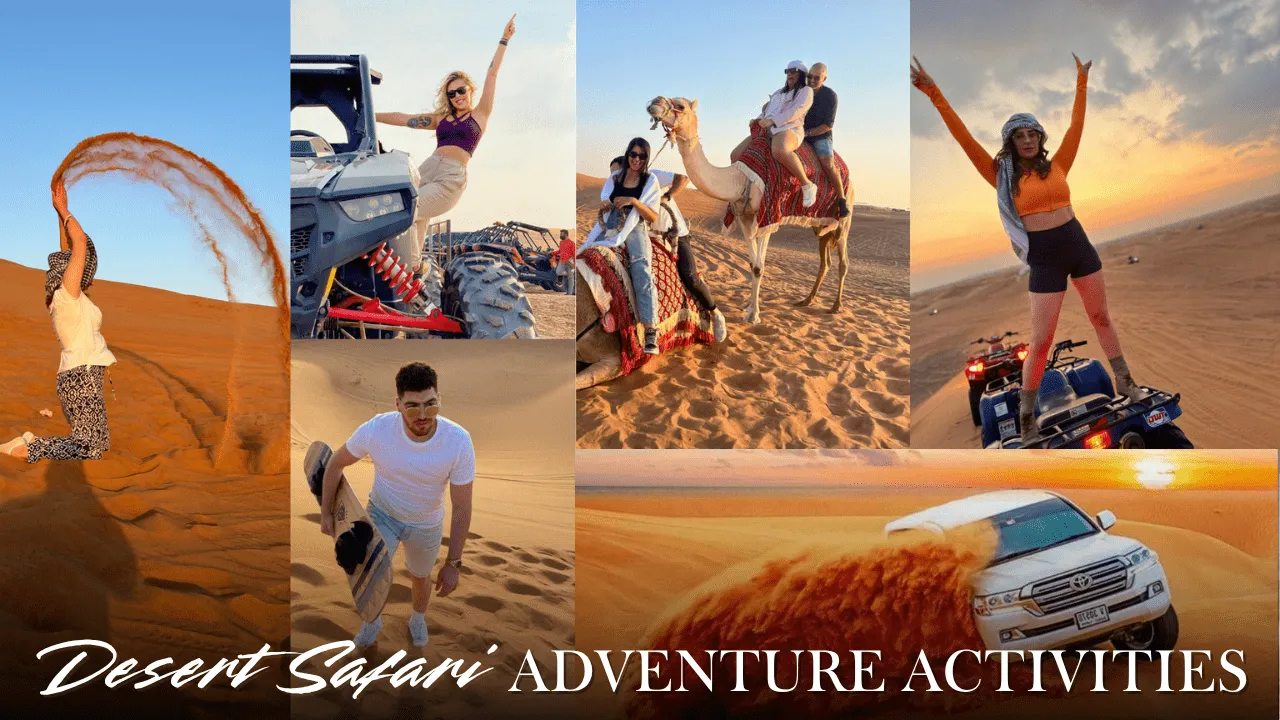
Discover the ultimate guide to adventure tourism in Dubai, from thrilling sky experiences to exhilarating desert safaris. Explore comprehensive coverage of Dubai’s best adventure activities including skydiving over Palm Jumeirah, dune bashing across golden deserts, jet skiing along pristine coastlines, and indoor skiing in the Arabian Desert. This complete adventure tourism guide covers everything from […]

The typical duration of a desert safari in Dubai is 6 to 7 hours for the evening package. Morning safaris last 4 to 5 hours. Overnight safaris run 16 to 18 hours. At Roar Adventure Tourism LLC, safari durations range from 4 hours to 18 hours depending on the package you choose. Every duration listed […]
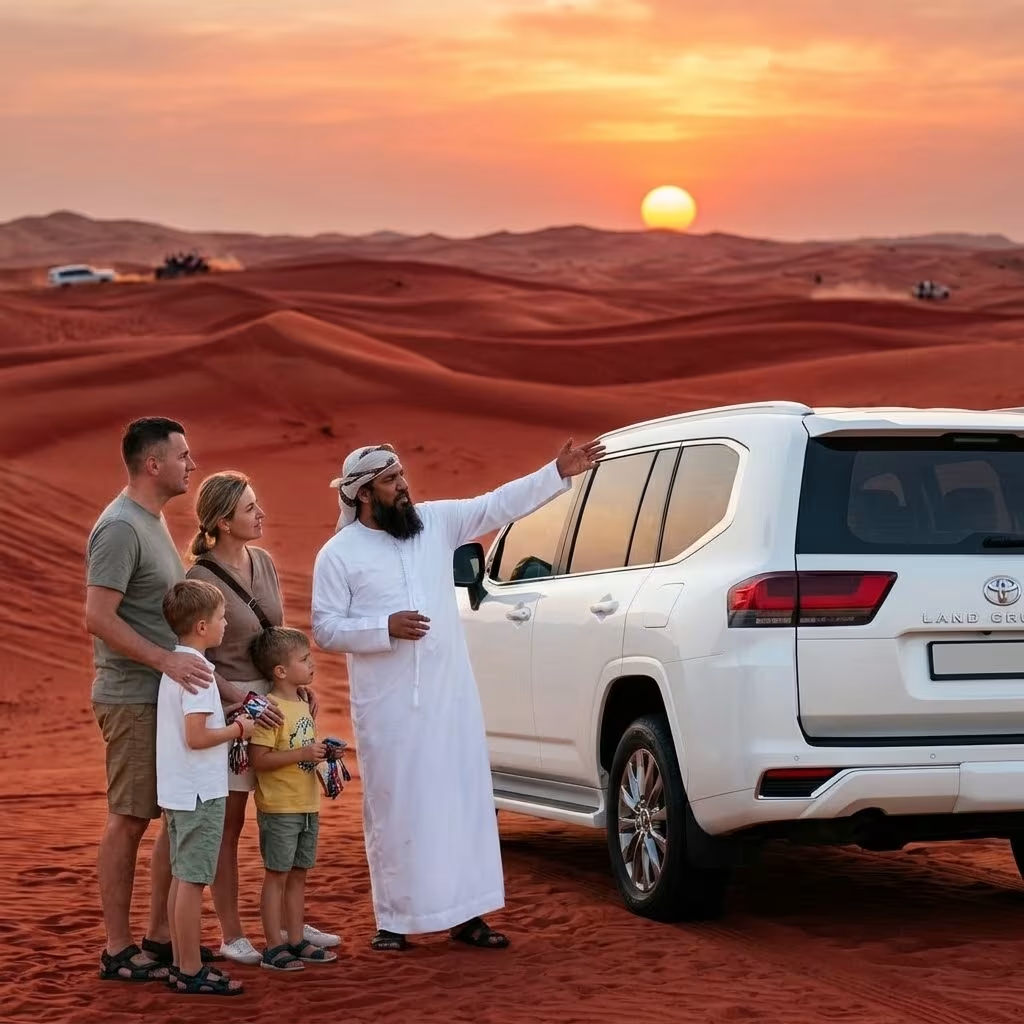
A desert safari is a guided or self-drive trip into Dubai’s sand dunes, most often to Al Lahbab, Al Aweer, or the Dubai Desert Conservation Reserve. A standard first-timer package includes hotel pickup, 20–30 minutes of dune bashing, a camel ride, and a BBQ dinner, and costs between AED 35 and AED 250 per person […]
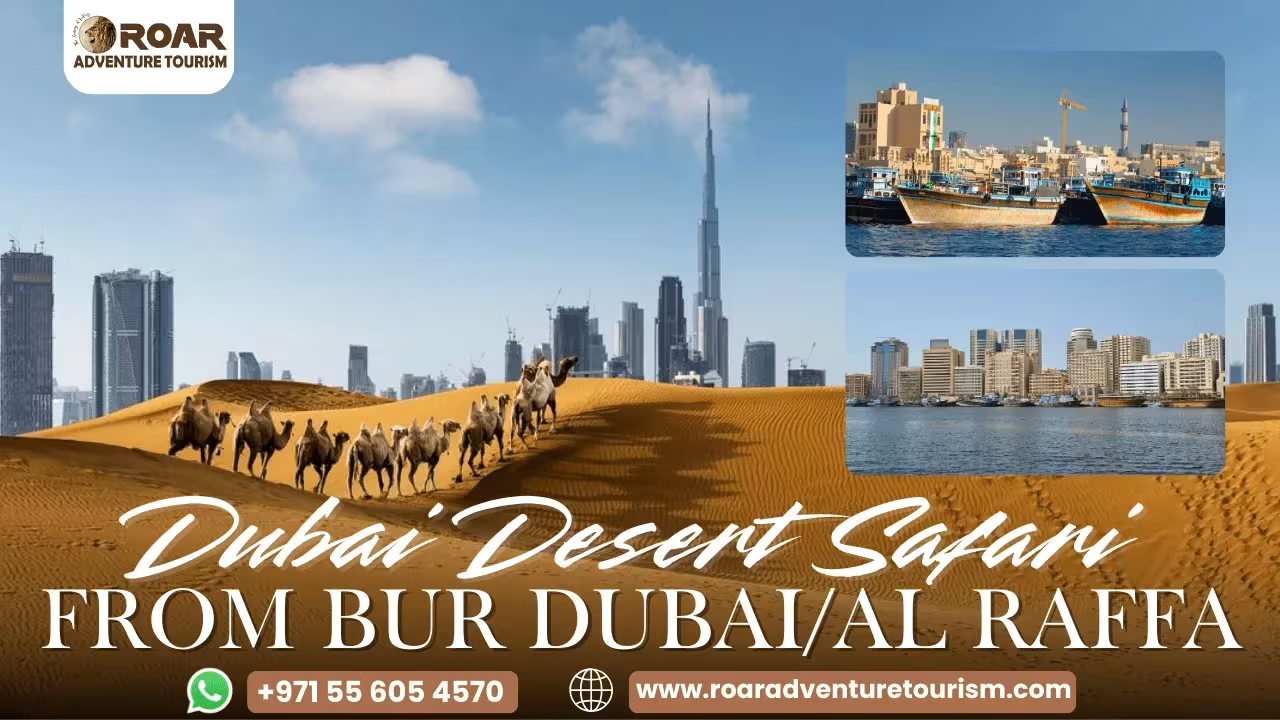
A desert safari from Bur Dubai is the perfect way to experience Dubai’s iconic desert with convenience, comfort, and cultural authenticity. Bur Dubai and Al Raffa offer central pickup locations with easy access to major desert routes, making them ideal starting points for safari tours. Roar Adventure Tourism provides reliable hotel pickup from popular hotels […]